

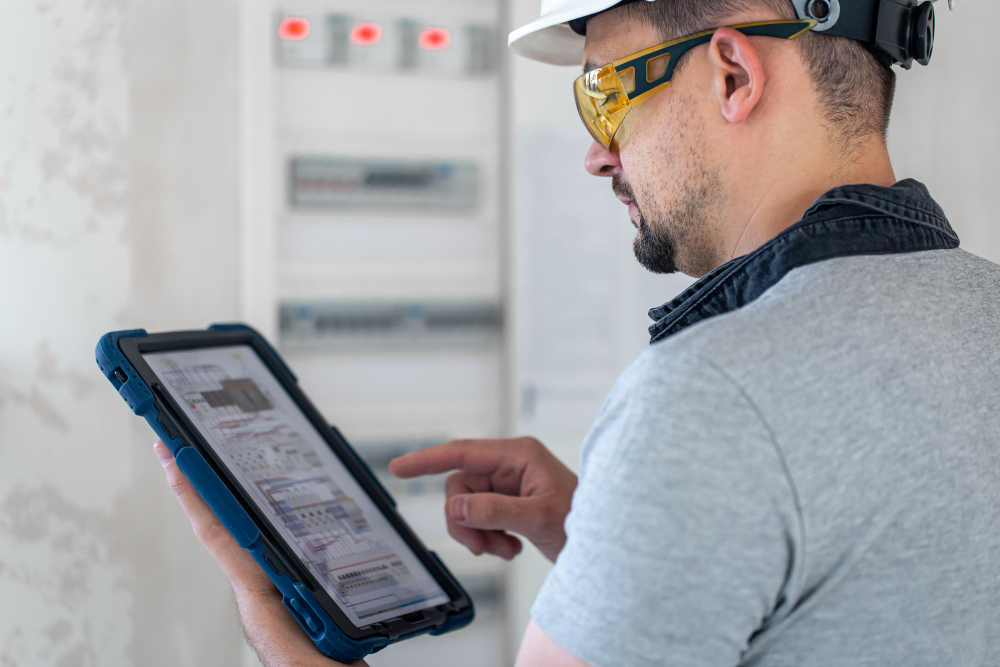
Onsite calibration keeps your equipment where it belongs: on your production floor or in your lab. That’s why many facilities choose onsite equipment calibration services in New England over sending instruments out.
Nothing travels or sits in a shipping queue. Your team does not have to work without a critical tool for days. A technician visits you, does the work in your facility, and leaves you with the records you need.
For manufacturers, labs, and processing plants, that can be the difference between a routine task and a disrupted week. It is not the right fit for every instrument, but for many, it is a simpler path.
What Is Onsite Calibration?
Calibration checks an instrument against a known reference standard and adjusts it for accurate readings. With onsite calibration, a technician does that work at your facility instead of in a laboratory.
Most providers offer both options. Some instruments suit a laboratory with controlled conditions. Others are practical to service right where they are used. A good provider helps determine the most appropriate option for each instrument.
Why Equipment Calibration Matters in the First Place
Every measuring device tends to drift over time. Heat, wear, vibration, and regular usage will cause the reading to change over time. Regular calibration is a way of catching this drift ahead of time before it starts to cause problems.
The consequences of failing to calibrate can be seen in many ways – for example, the weighers weigh something slightly wrong and the product is not going to be weighed right, or the temperature feels wrong so that a batch is rejected or some torque device moves out of range and the fastener fails to pass inspection.
Industries where processes are strictly controlled like, for example, biotechnologies, production of food and beverages or industrial production rely on calibration for this very reason – it ensures safety of people and quality of products and all the paperwork needed by auditors.
Why Facilities Choose to Calibrate Onsite
The main cause is downtime. Whenever an instrument leaves your premises for calibration, your production processes that rely on it cease, or spare instruments must be ready at hand. On-site calibration eliminates the need to wait for the equipment to be sent away and back.
Shipping comes with its own set of difficulties. Instruments can get damaged or delayed on the way, and shipments add up to the costs. With on-site calibration, you eliminate these risks.
Also, having full control of the equipment troubles you don’t have to worry about where it is now and who’s operating it at the moment.
Scheduling is made easier. You can complete all calibration in one go or drag it throughout the year according to your own schedules and needs.
How An Onsite Calibration Program Usually Works
A typical well-run program tends to follow a clear sequence:
- Inventory review: a list of your instruments and the calibration each one needs
- Planning: a schedule built around production so critical equipment stays available
- Onsite visits: technicians calibrate at your facility on the agreed dates
- Reporting: field reports and certificates you can review and keep
Reporting deserves attention. Calibration records often support audits and quality requirements, so they should be complete and easy to find. Some providers offer online access to certificates and asset status, which saves time when an auditor asks for records.
What to Look For in a Provider
Accreditation
Accreditation is the first thing to verify when comparing different onsite equipment calibration services in New England. Look for ISO/IEC 17025, the international standard for calibration and testing laboratories.
Then ask whether the accreditation covers specific instruments and whether that includes work done at your site. Scope can differ from one instrument type to another.
Technical Range
Check if the provider handles the equipment you actually use, such as pressure, temperature, torque, mass, or dimensional instruments. A provider with an in-house laboratory can also handle instruments that require lab-based calibration.
Documentation
Ask what records you receive after each visit. Look for clear field reports and calibration certificates, and ask how long they are kept and how easily you can retrieve them. Good records save time during audits and make it easier to track the history of each instrument.
Coverage and Scheduling
Confirm that the provider works in your location. Ask how scheduling works and how quickly the team can respond if an instrument needs attention between planned visits.
Is Onsite Calibration Right for Every Instrument?
There are certain instances when onsite calibration may not be an option. Several types of instruments can require particular situations to rehabilitate them. Some require coming back to the manufacturer for repair and evaluation from the manufacturer’s experts.
Onsite calibration works fine if you are working with the bigger receiving equipment, fixed equipment, or equipment that is tied up in a process that cannot be stopped easily. It is simpler to send the smaller, portable units. You should ask whether onsite calibration is the best option for each device.
Get Ready for a Technician Visit
A little preparation keeps the visit efficient. Prepare your instrument list with the most recent calibration certificates. Decide which equipment can be taken out of service and when. Make sure the technician knows where to go and who to contact on site.
If some instruments are critical to a running process, say so early so the schedule can account for them.
Making the Final Choice
Before choosing on-site equipment calibration services in New England, start with your instrument list and your production schedule. Those two things show how much downtime you can accept and which instruments need attention first.
Based in Saco, Maine, we at LAW Calibration provide ISO/IEC 17025-accredited on-site calibration services for facilities across New England. Our field technicians work with laboratory metrologists to provide expert support for both on-site and laboratory calibration needs. We make field reports and certificates available for review. Contact us today to discuss your equipment needs or request a quote.